Project Detail
Autonomous E-Bike Interaction Design Project
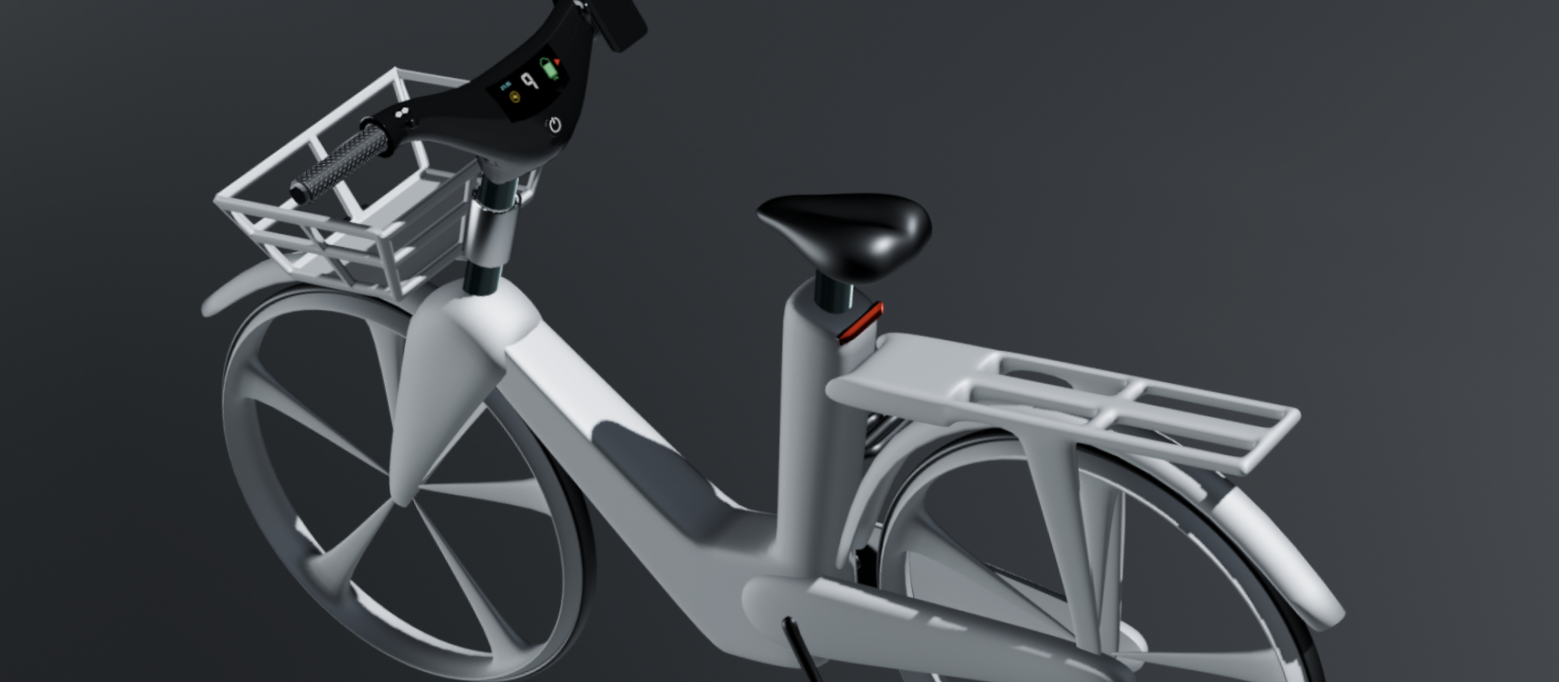
This project explored the interaction design of an autonomous e-bike system, focusing on both digital and physical interfaces to support safe and intuitive user experiences. The final outcome was a comprehensive design document developed in Figma, detailing autonomous features, on-bike physical controls, and a companion city e-bike application.
The project began with mixed-methods research, including a literature review on e-bike usage and autonomy and primary user interviews. Based on these findings, we identified key user pain points related to safety, control, and trust in autonomous systems.
To support rapid iteration, we developed low-fidelity physical prototypes using inexpensive materials such as cardboard and conducted formative user testing. These prototypes enabled early evaluation of interaction concepts and informed iterative refinement of both physical and digital interfaces. In parallel, we designed a digital interface for a city-scale e-bike application integrating autonomous features and rider feedback.
This project strengthened my understanding of interaction design fundamentals and frameworks, including the Double Diamond design process and Jesse James Garrett's model of user experience. I gained experience applying information architecture principles and using low-cost prototyping as a design research tool to support user-centered product development.
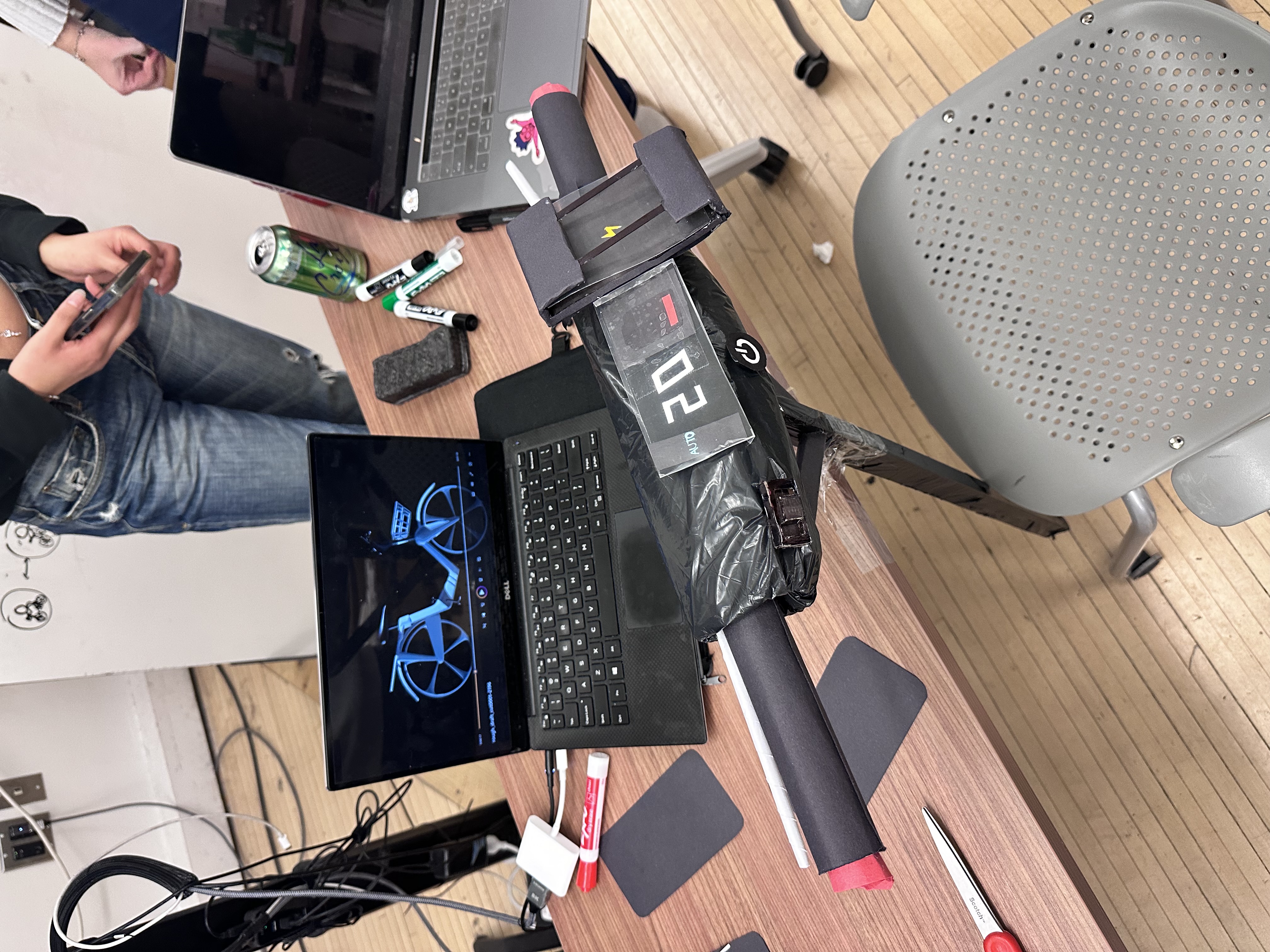
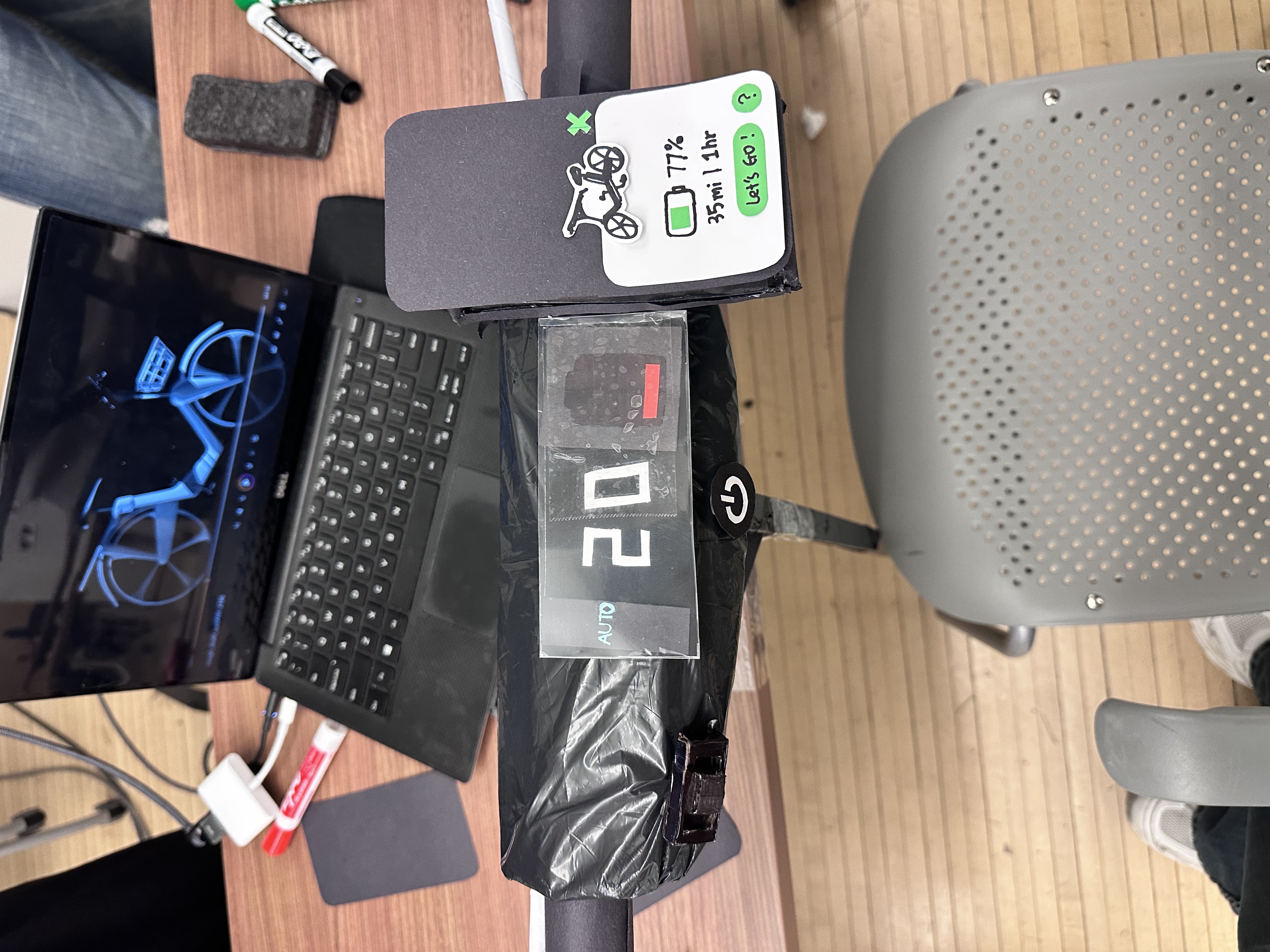
Fast paper prototyping allowed us to assemble screens, controls, and on-bike displays with simple materials, making the prototype efficient to build, test, and revise.
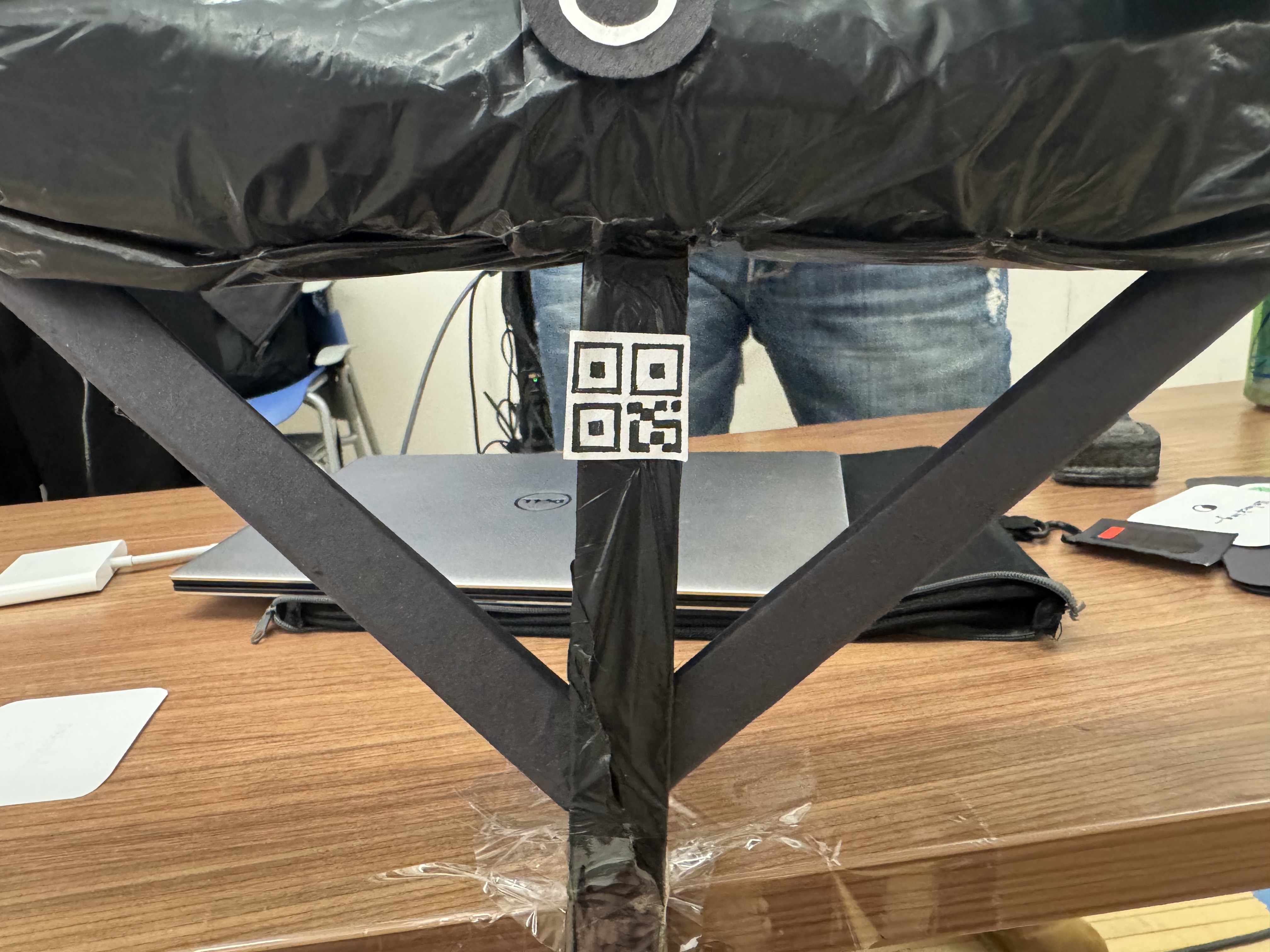
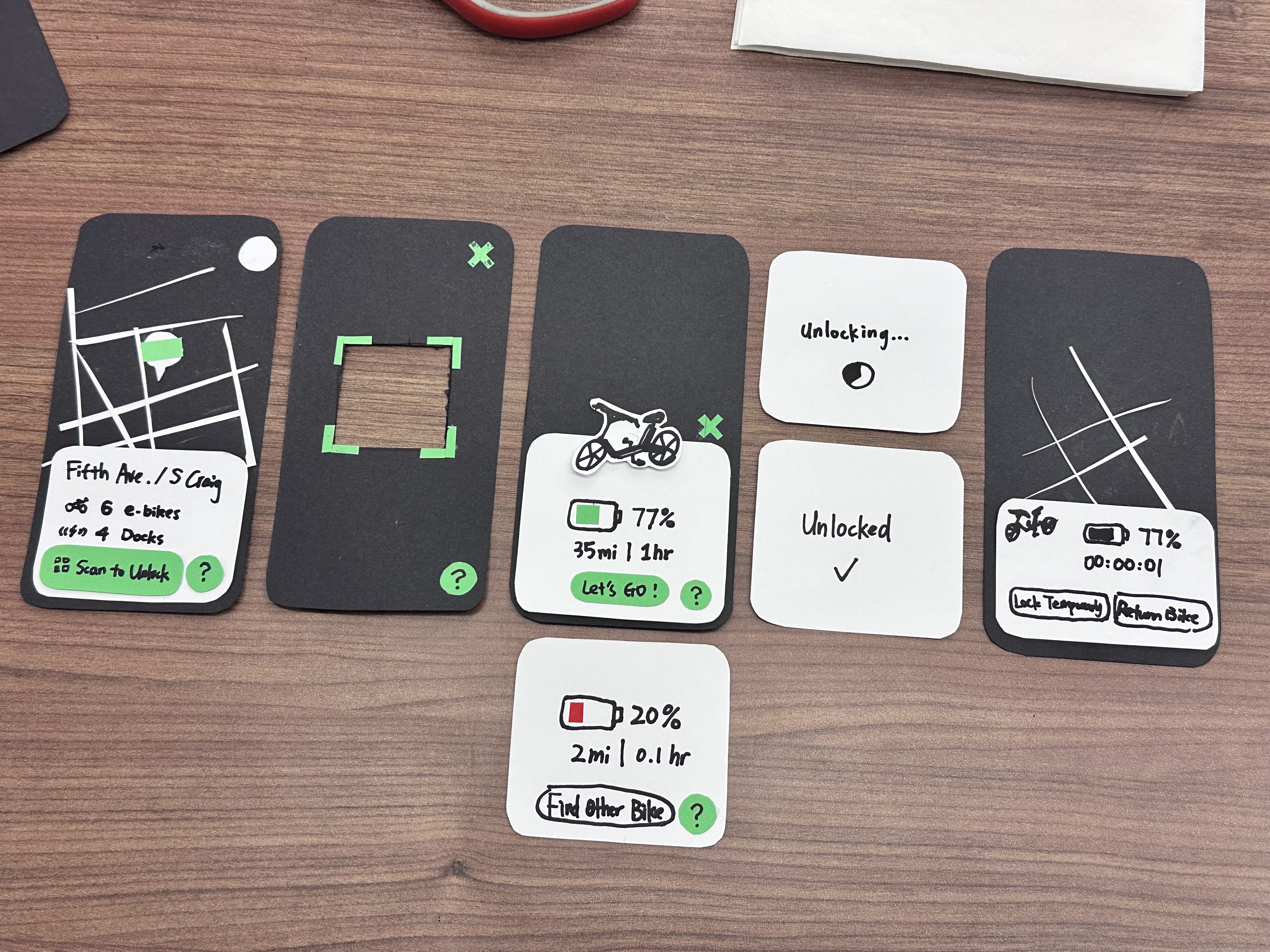
Paper prototype details showing QR-code access, app screens, ride status, and control states used for quick user testing.
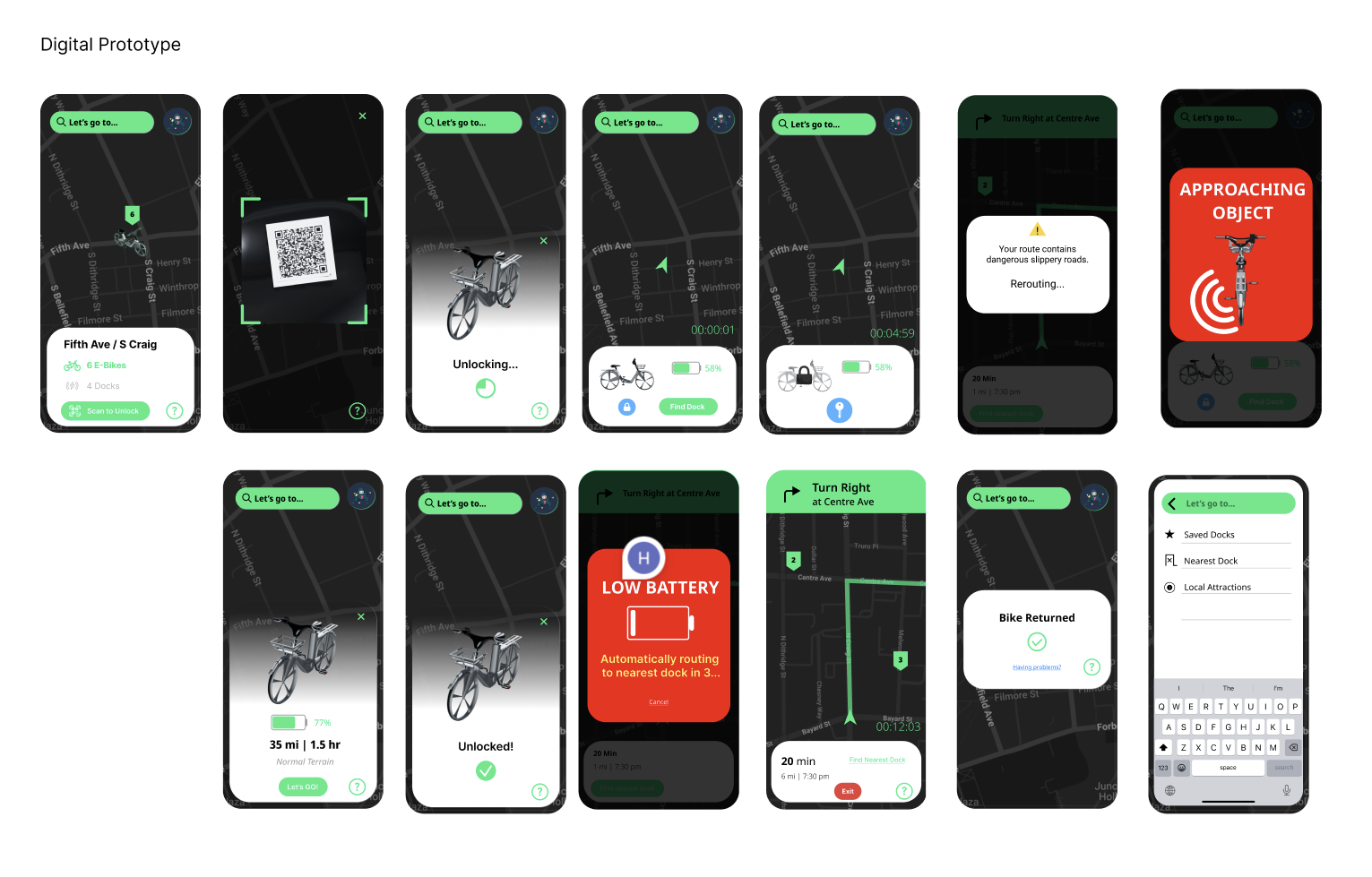
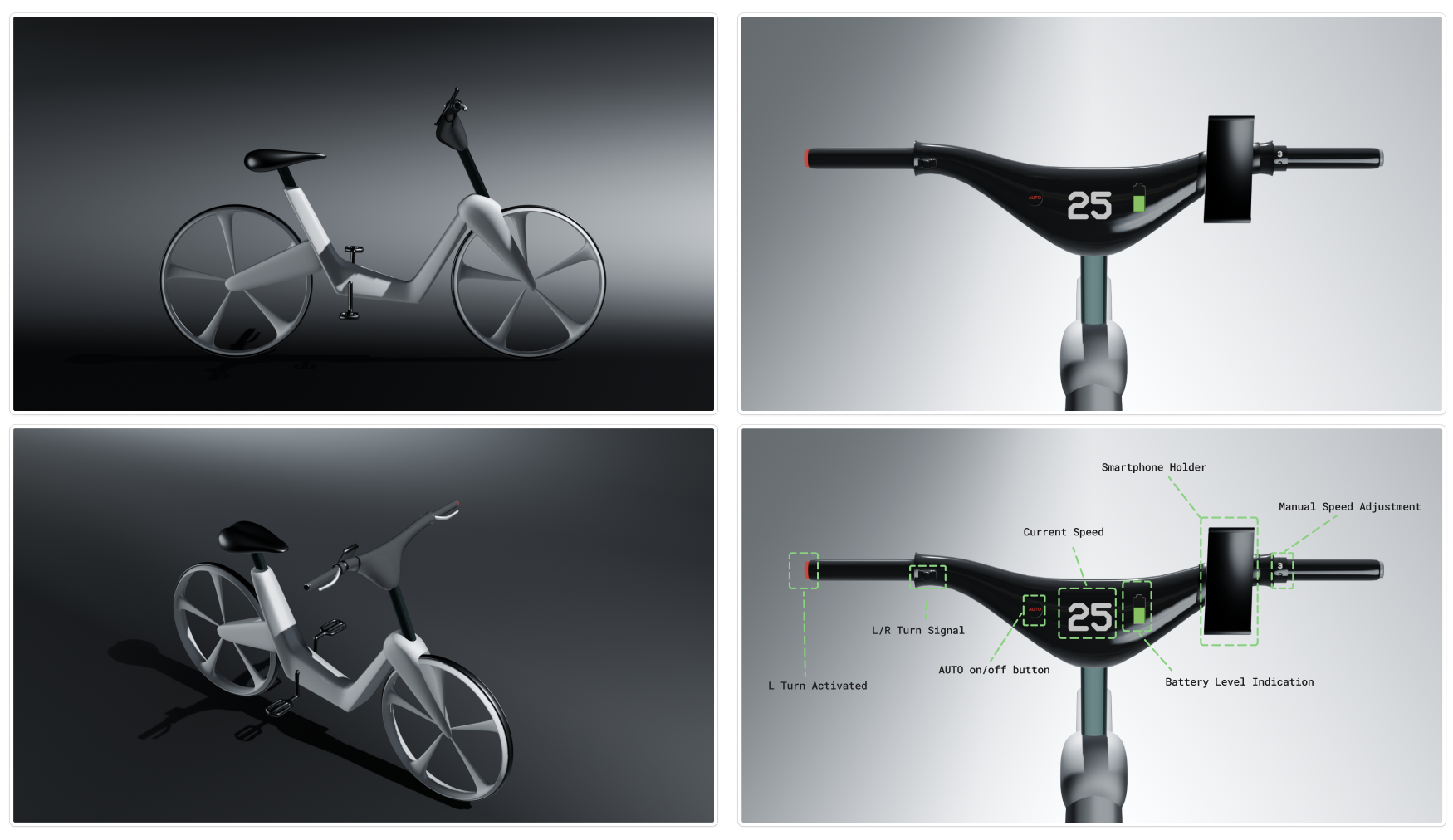
Finalized after the paper prototype: the companion app UI and e-bike model refined the digital interface, autonomous controls, and on-bike display system.