Project Detail
BotMania
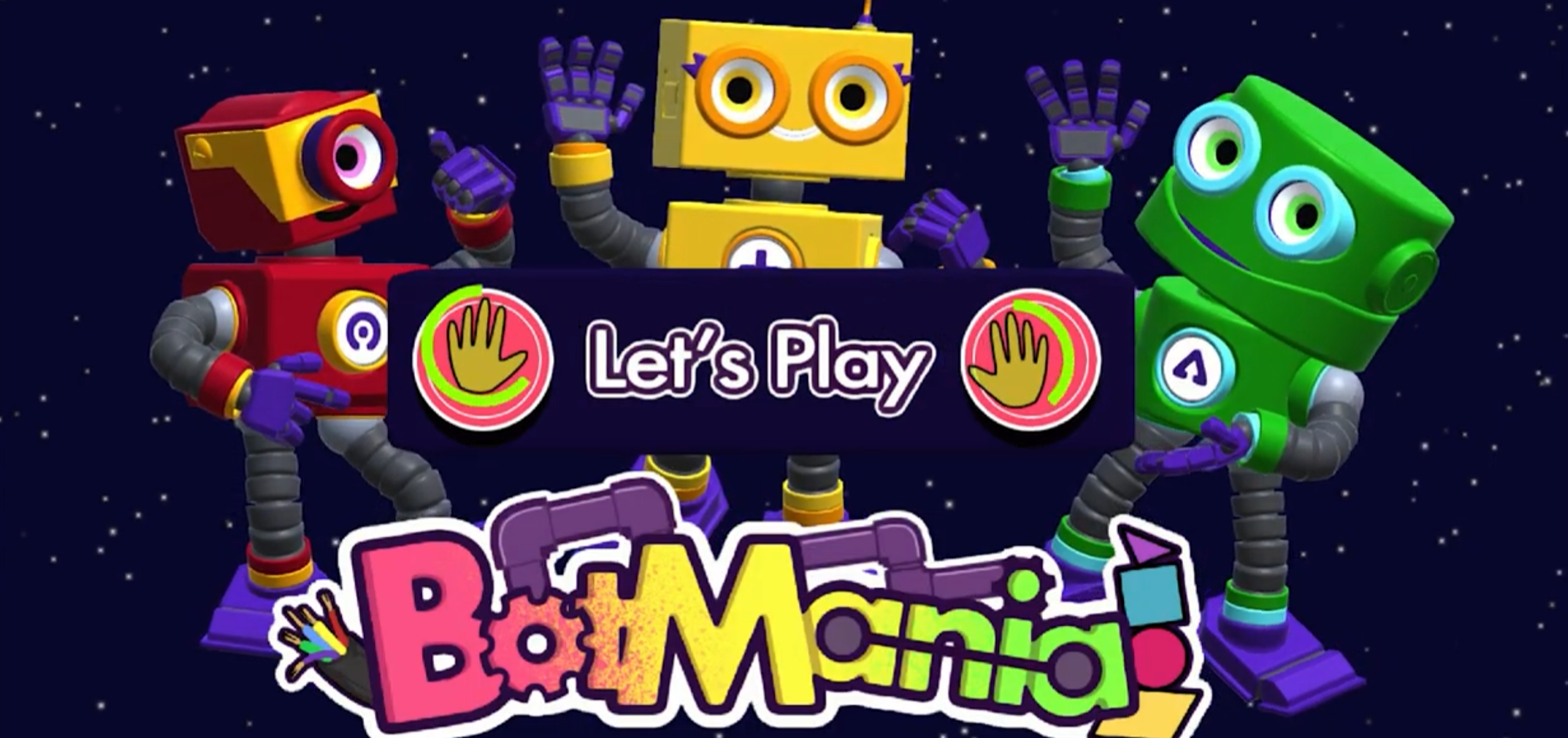
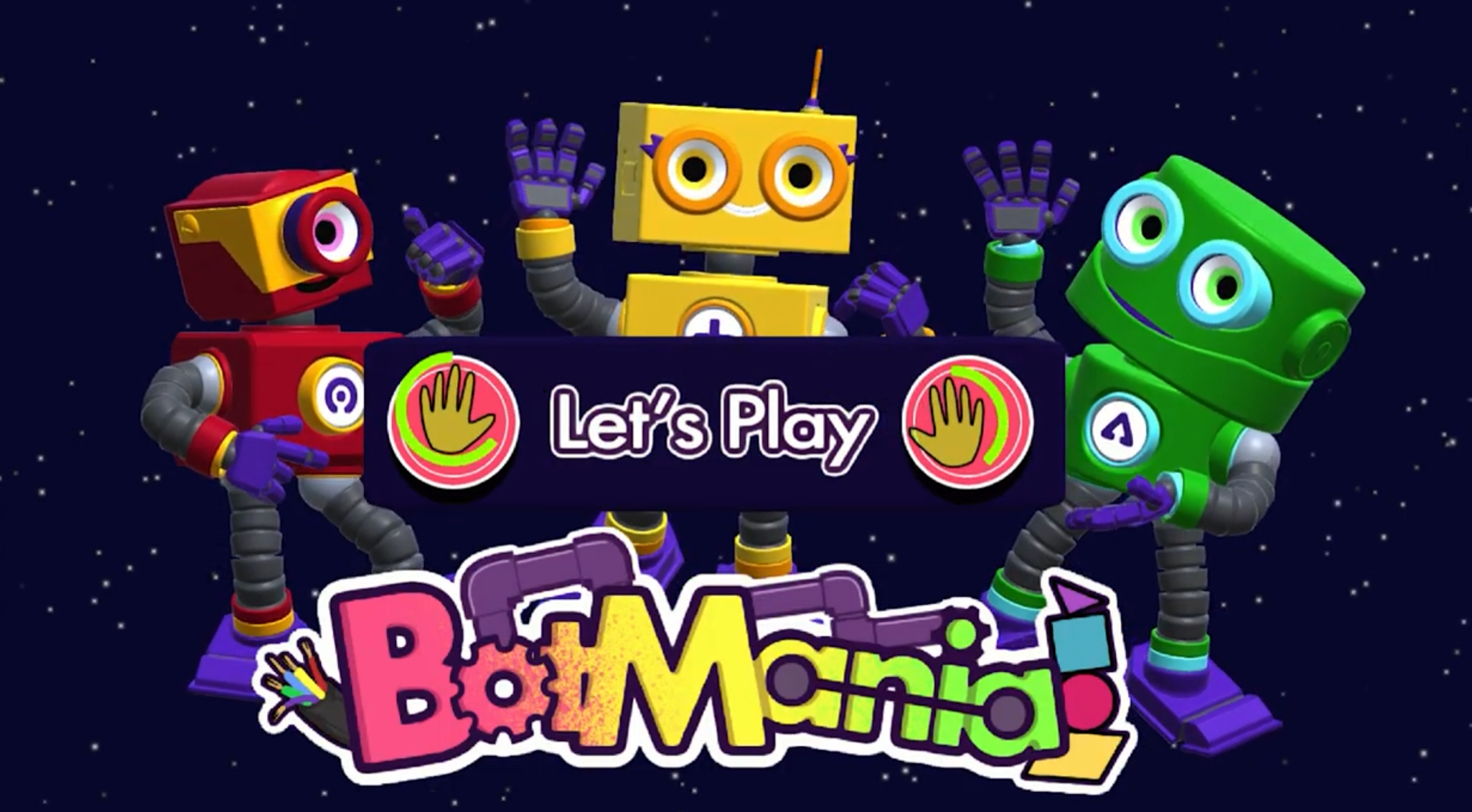
BotMania is a motion-tracking educational game developed to introduce children to STEAM concepts through embodied interaction and playful learning. The project aimed to create an engaging and accessible experience for young users by combining physical movement with interactive digital content.
I designed the end-to-end user experience, including user flow development, storyboard sketching for rapid iteration, UI asset design, and 2D animation production. I also supported production management by coordinating timelines and facilitating cross-disciplinary collaboration.
A central component of the project involved iterative user testing with children in the target age range. I observed user behavior during play sessions, developed design-oriented questions to elicit meaningful feedback, and translated observational insights into design iterations. This process provided hands-on experience with user-centered design, formative evaluation, and qualitative observation methods within an HCI context.
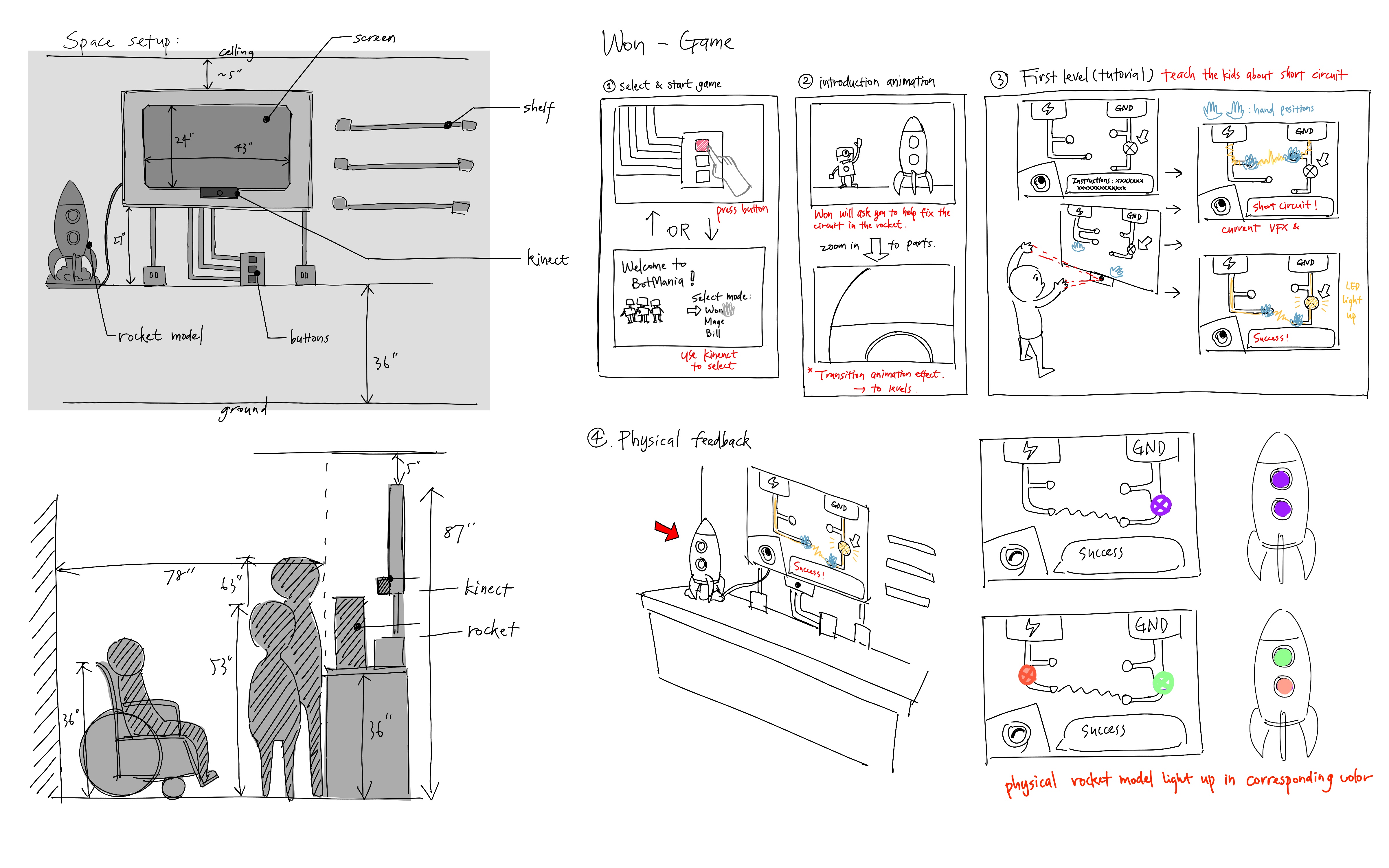
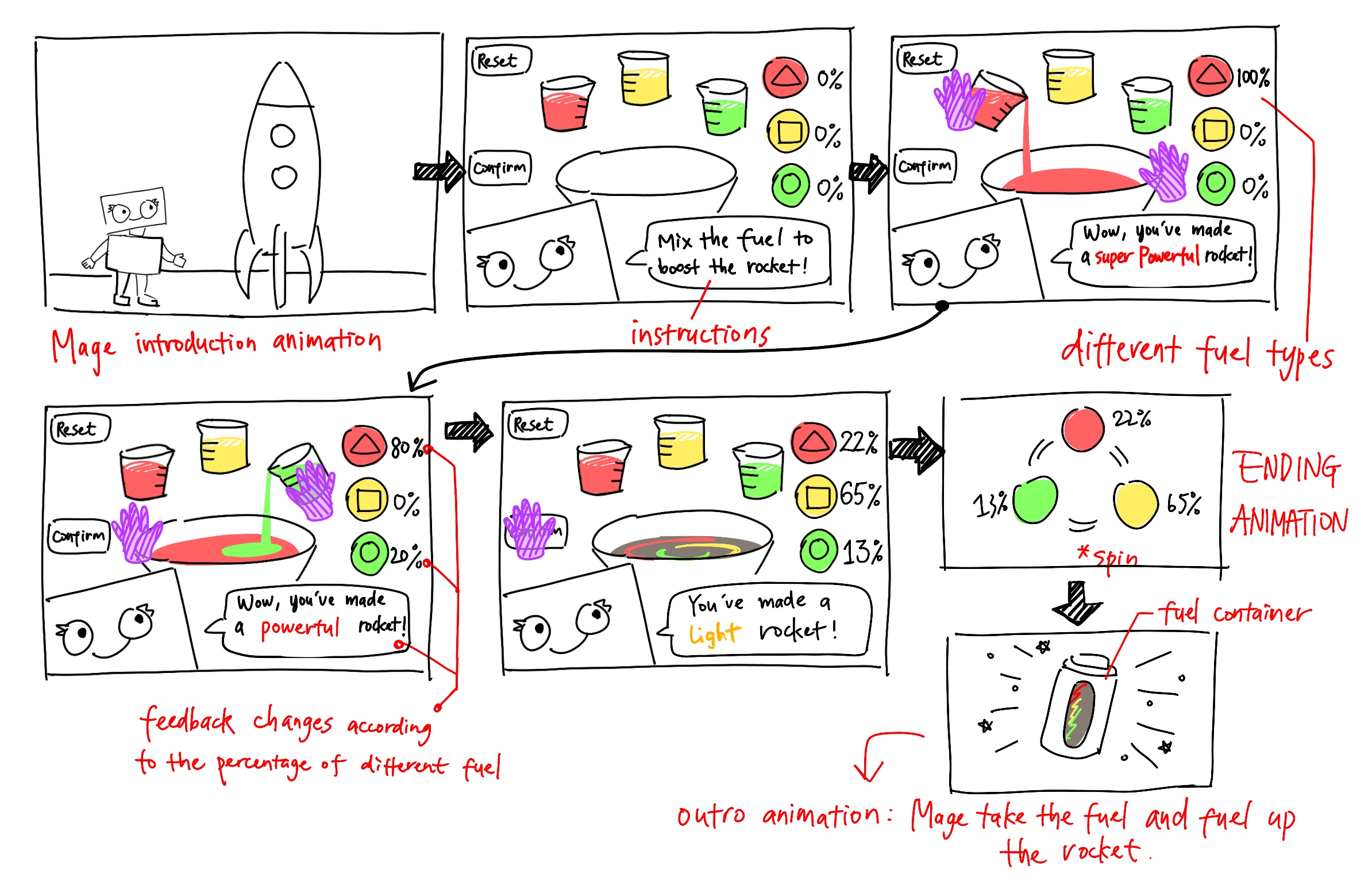
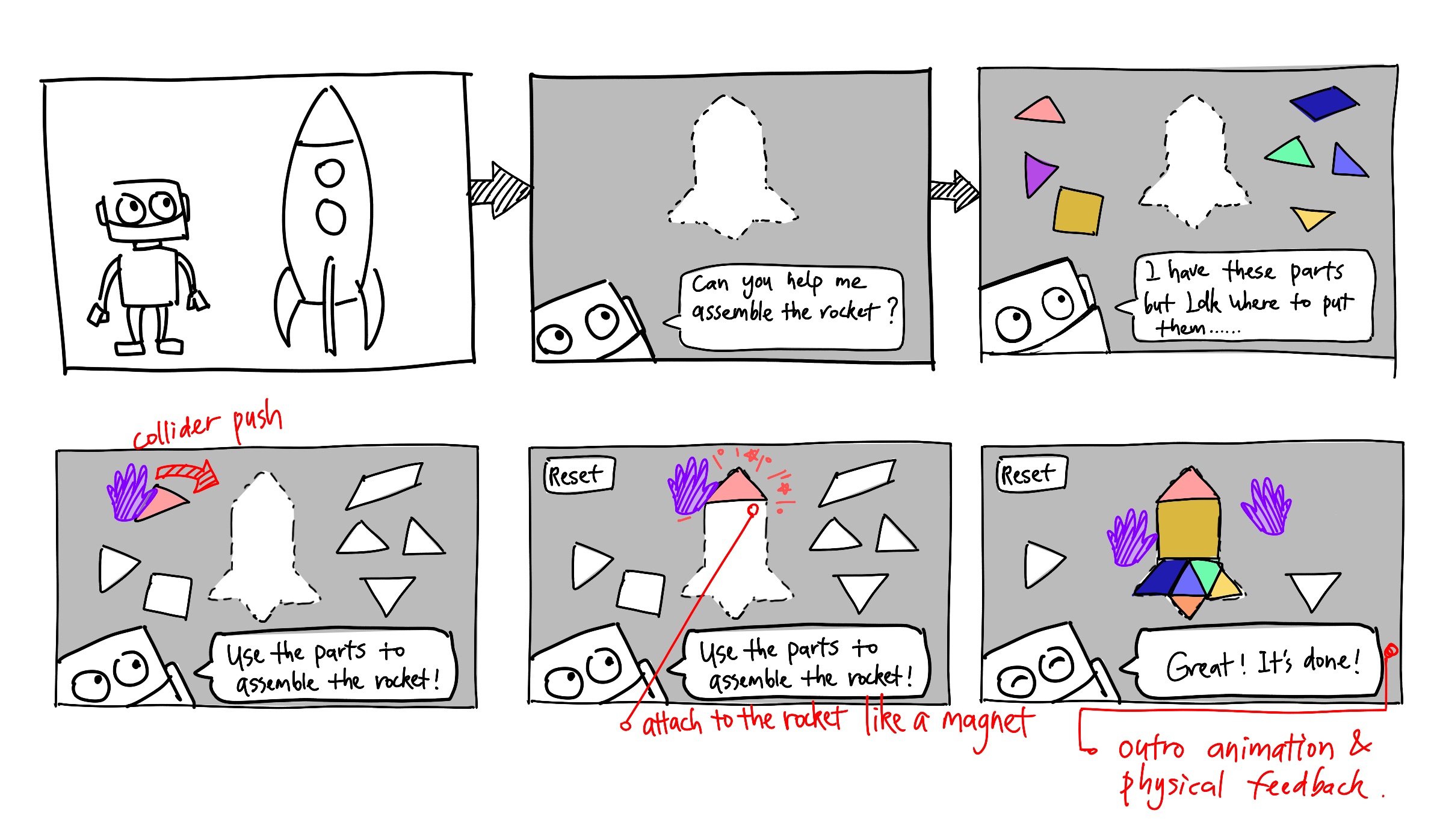
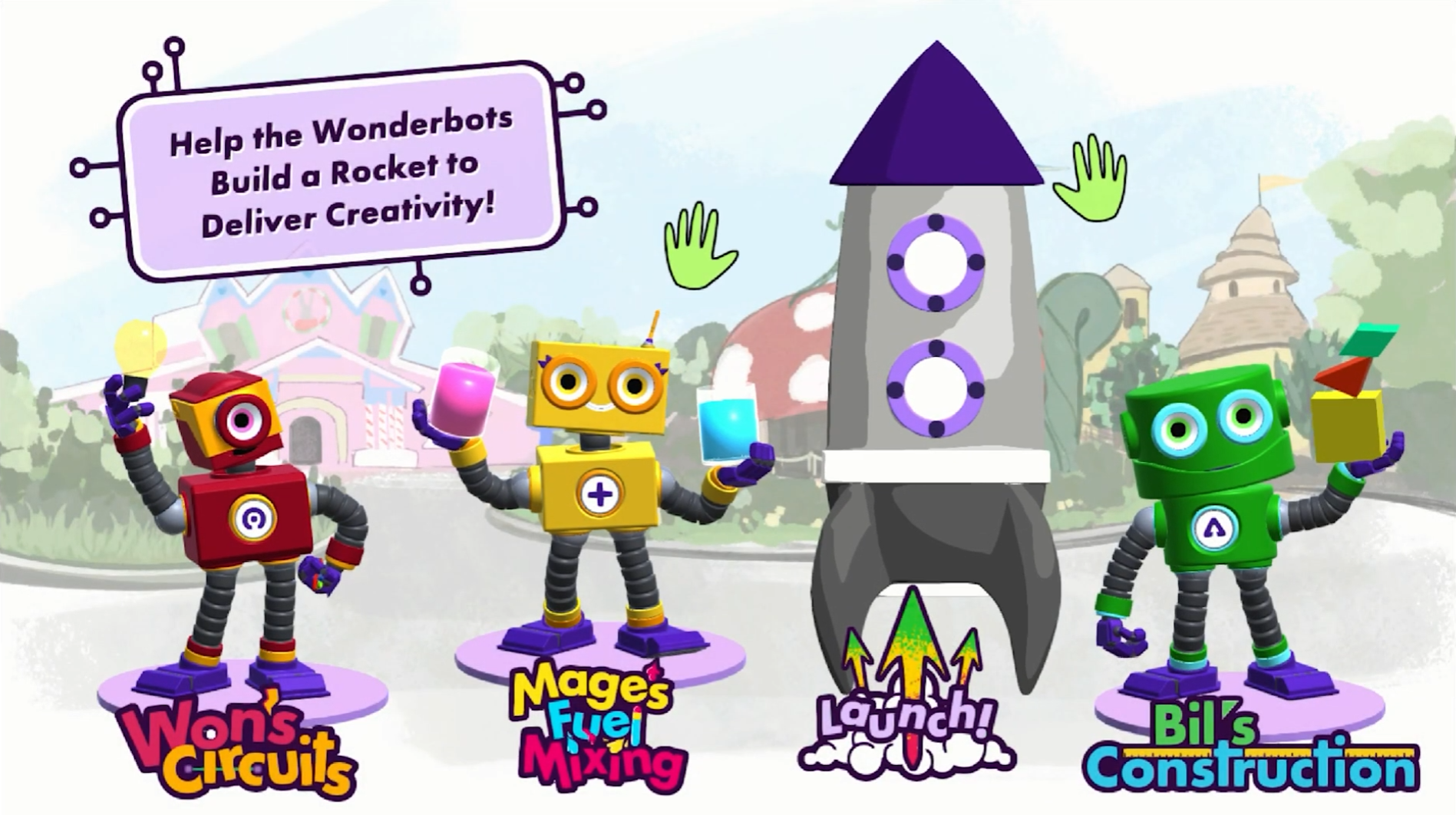
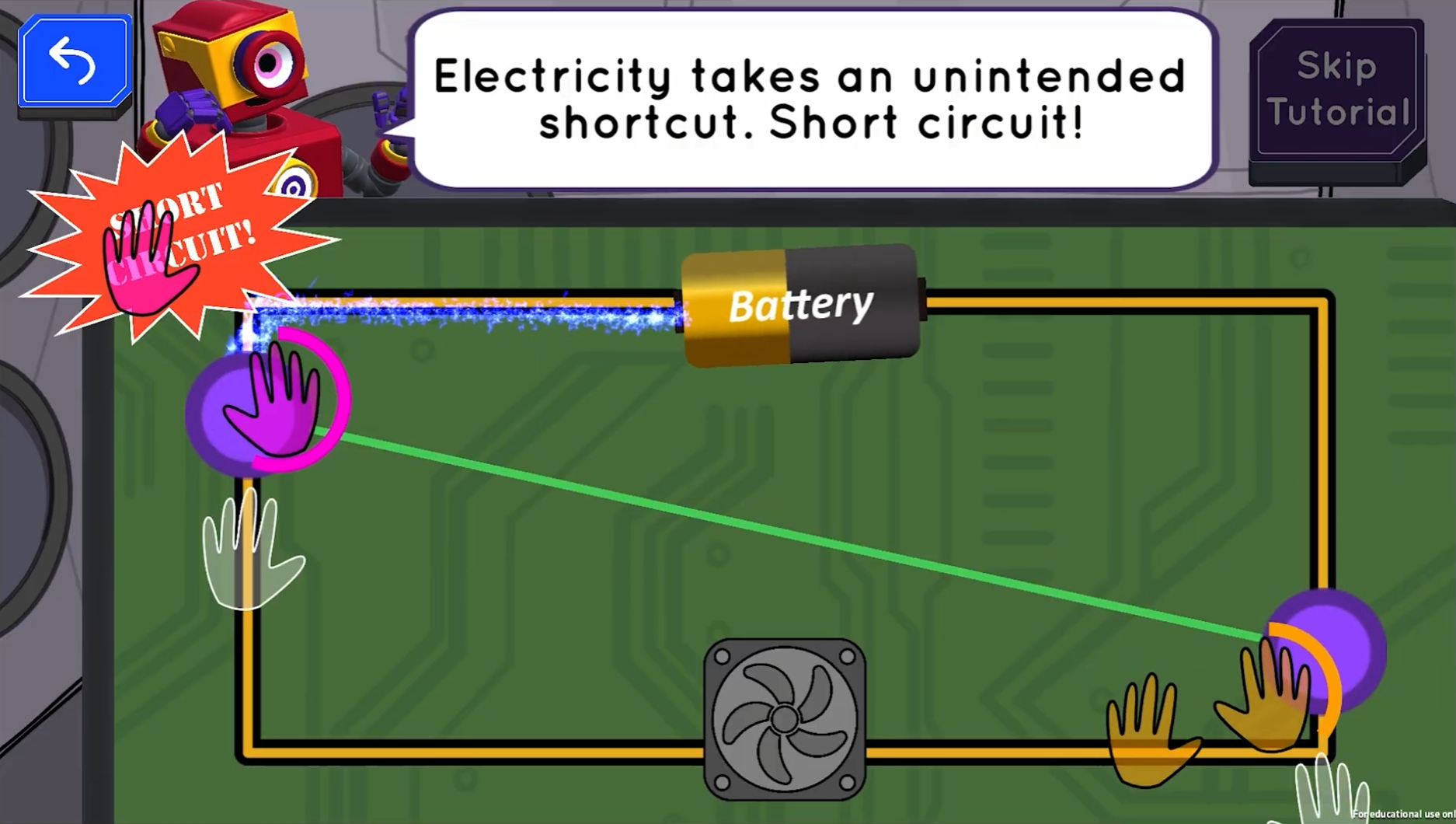
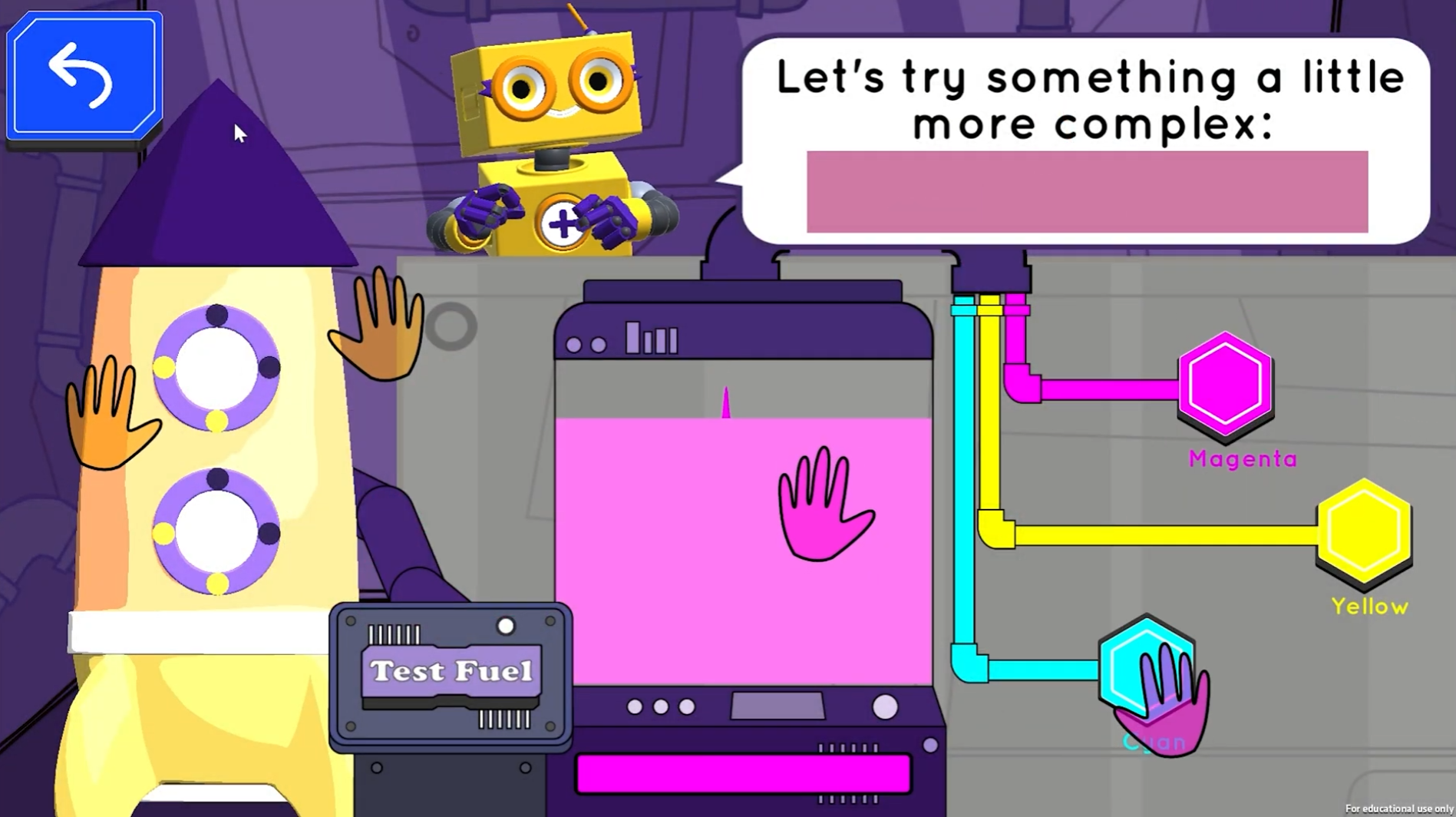
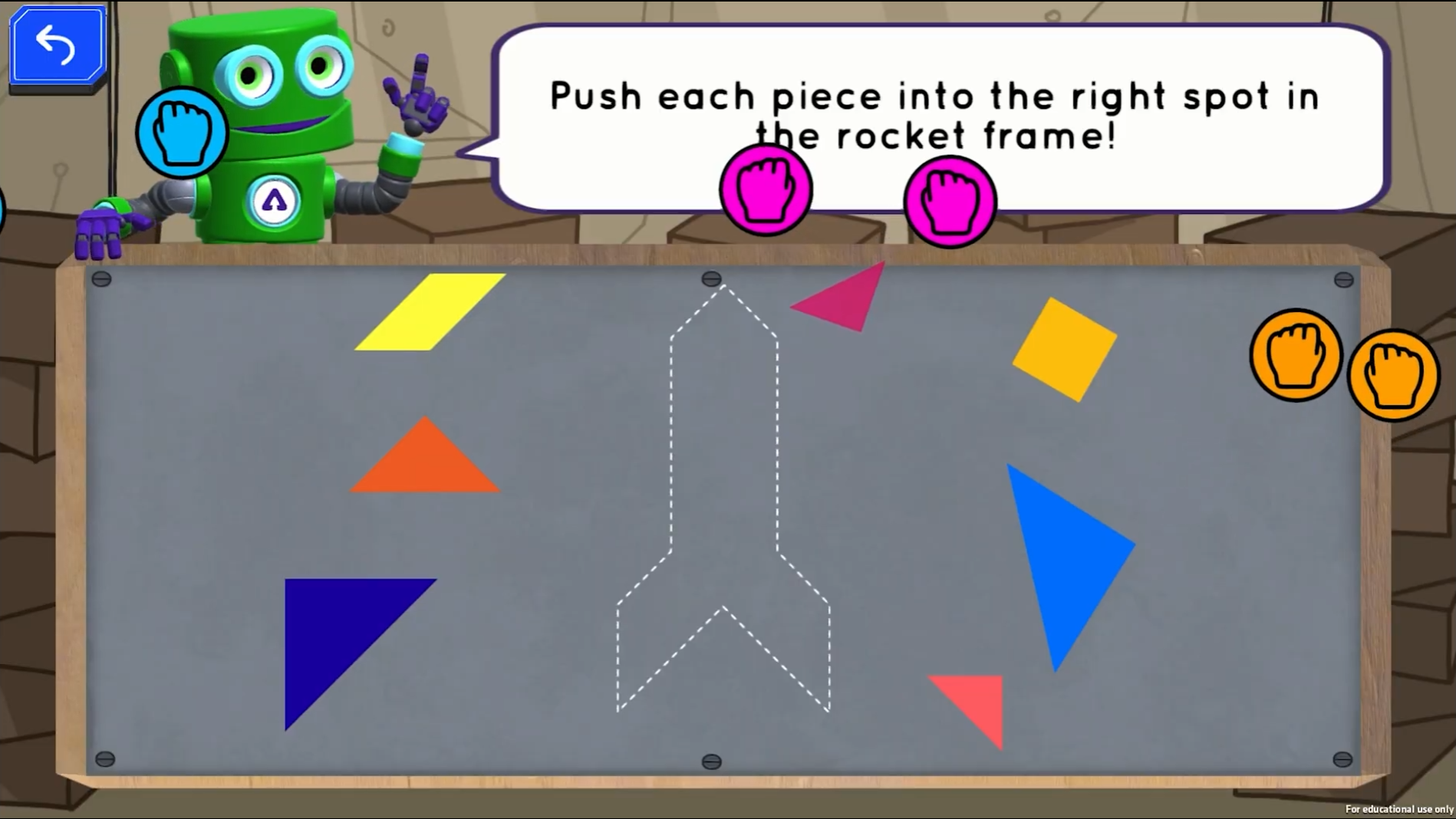
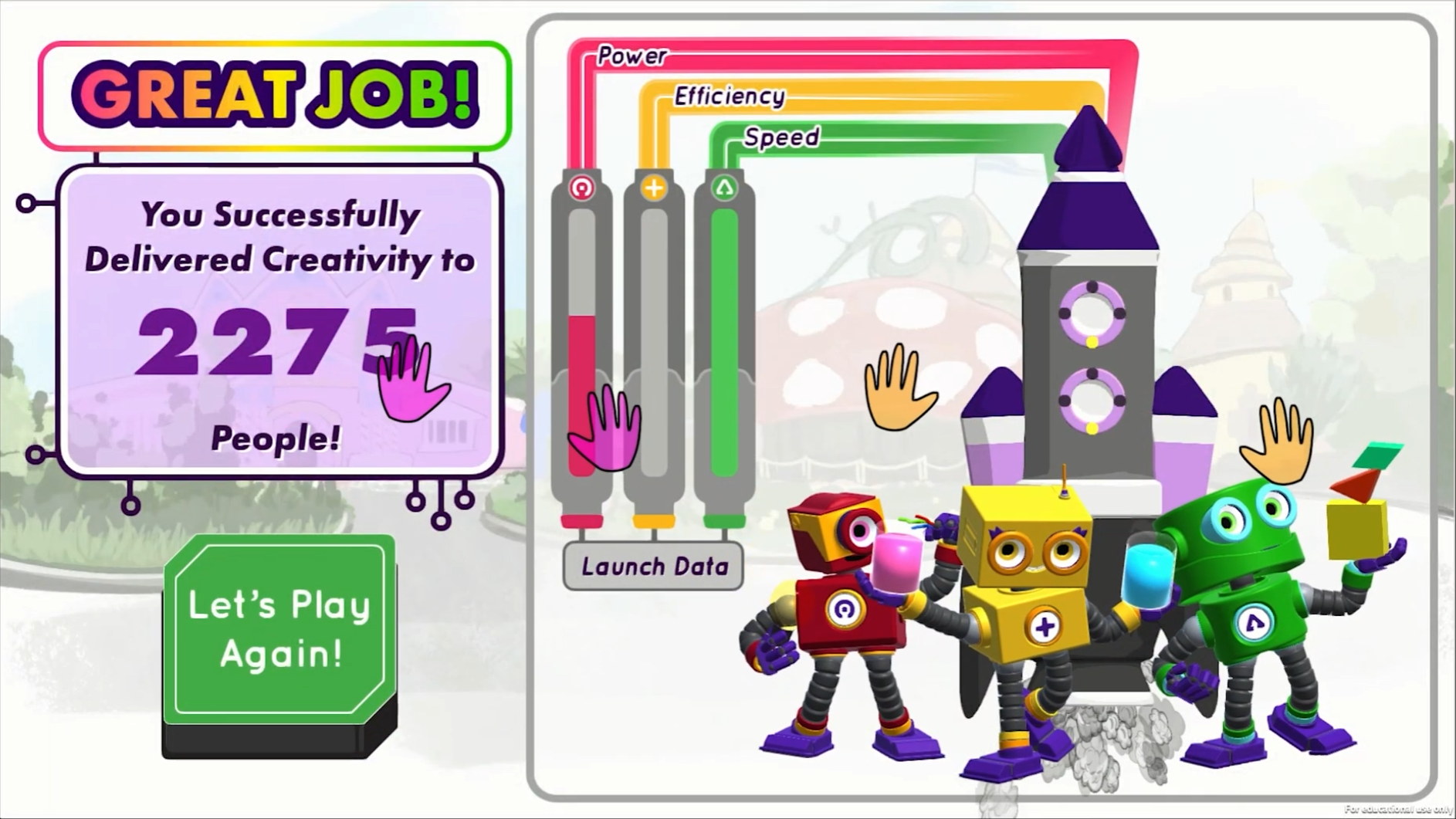
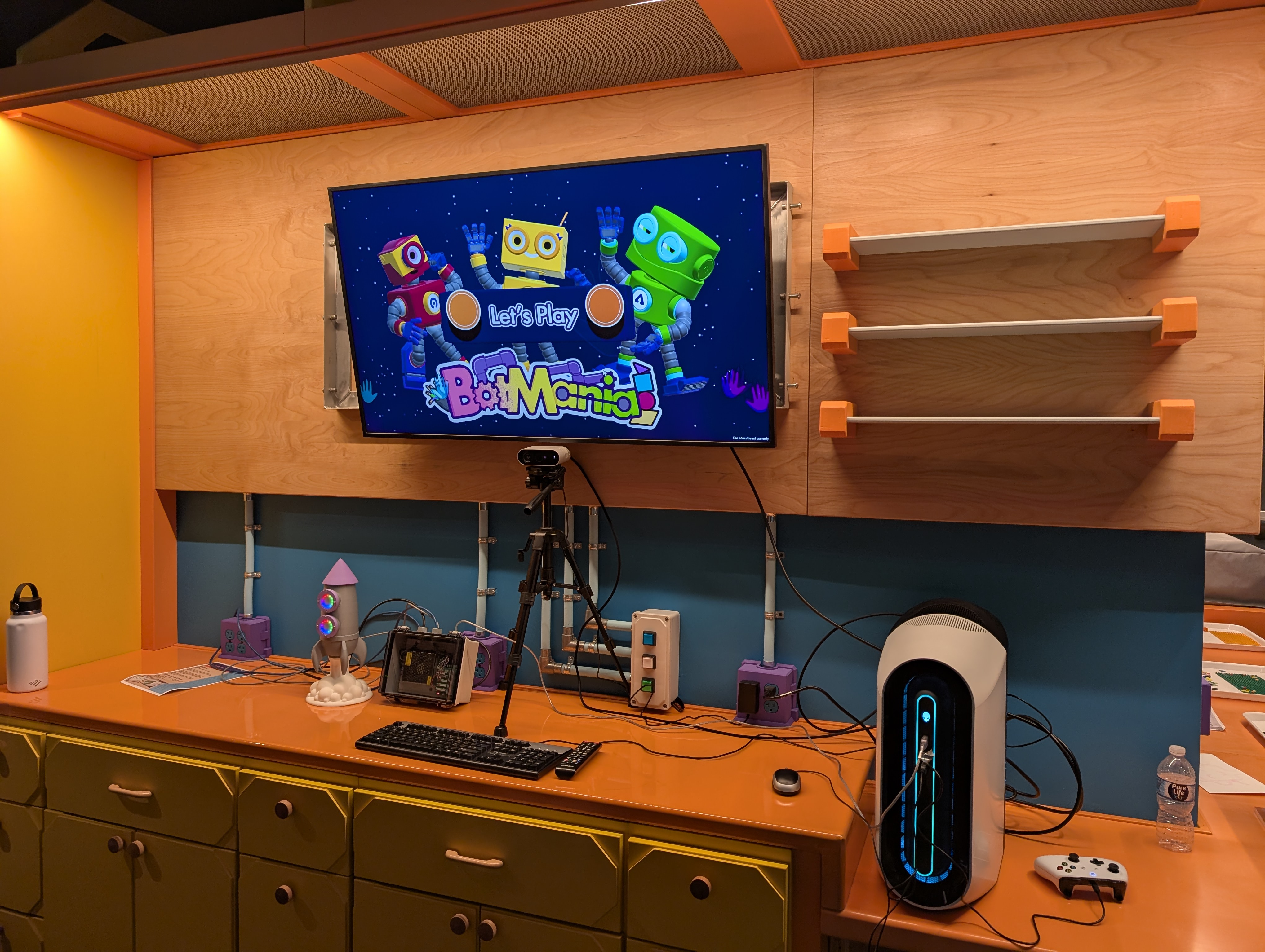
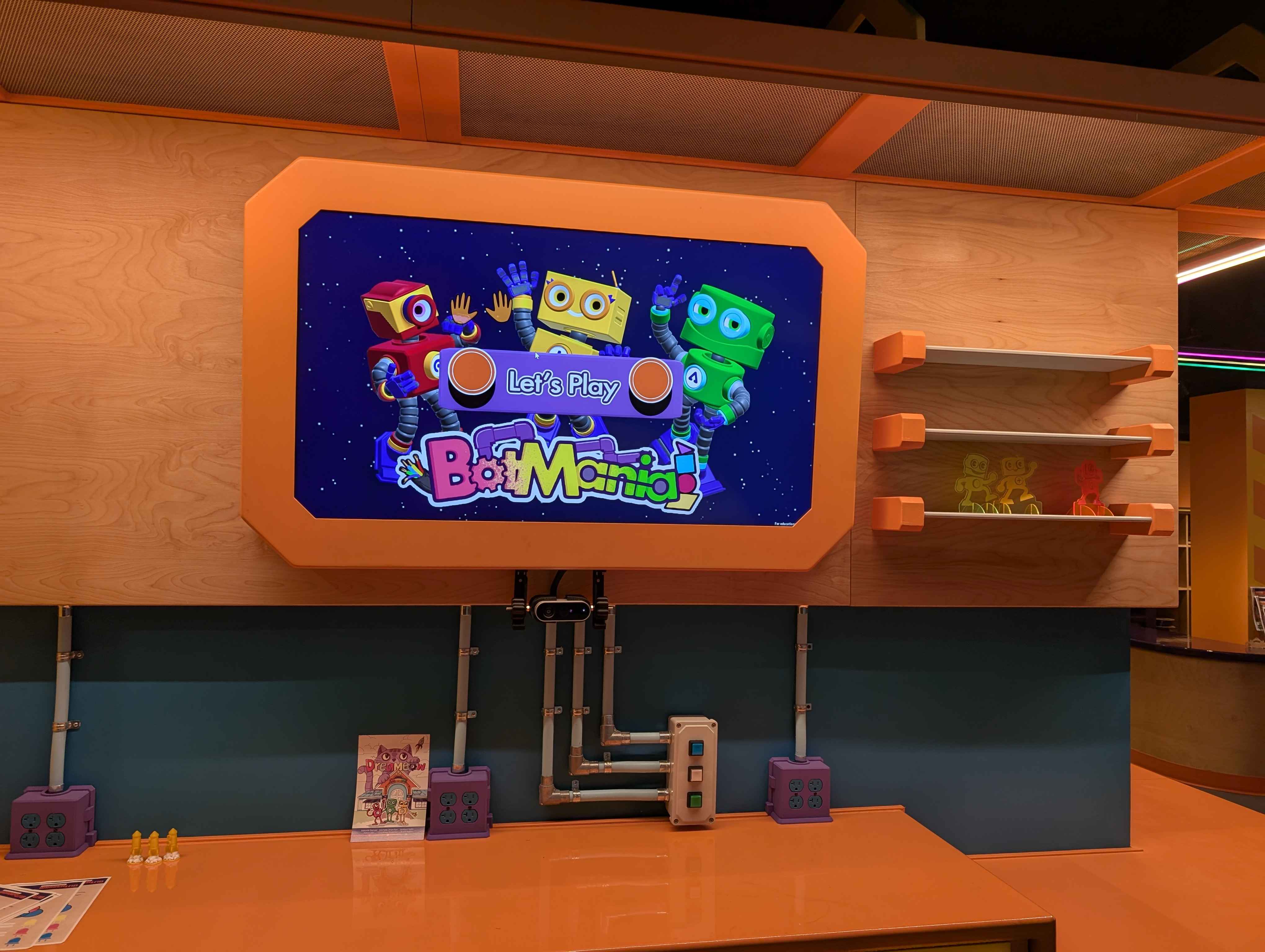
One of the most important lessons I learned from BotMania was that a workable overall user flow and early full-experience playtesting are essential. During production, we initially designed the three games separately, but we did not have a clear overall flow to connect them together, either system-wise or narrative-wise. Our early playtests also focused mainly on the individual games rather than the complete experience. More than halfway through the semester, we realized that the overall flow was not working, and we had to work overtime to redesign how the games connected. This experience taught me the importance of looking above individual tasks and continuously evaluating how smaller design decisions fit into the full user journey.
Another major lesson was the importance of accessibility in embodied interaction. Because BotMania was designed for a space visited by children with very different abilities and access needs, we had to think carefully about a wide range of interaction situations. Traveling to Orlando in the middle of the semester for playtesting was the right decision because it gave us valuable observations and feedback from real guests. For example, one child could not comfortably raise their arms, so their parent helped by holding their arm during play. This created a possible issue for skeleton tracking because overlapping bodies could confuse the hand-tracking system. We would not have discovered this interaction edge case without testing with the real target audience in the actual context.