Project Detail
Remnants
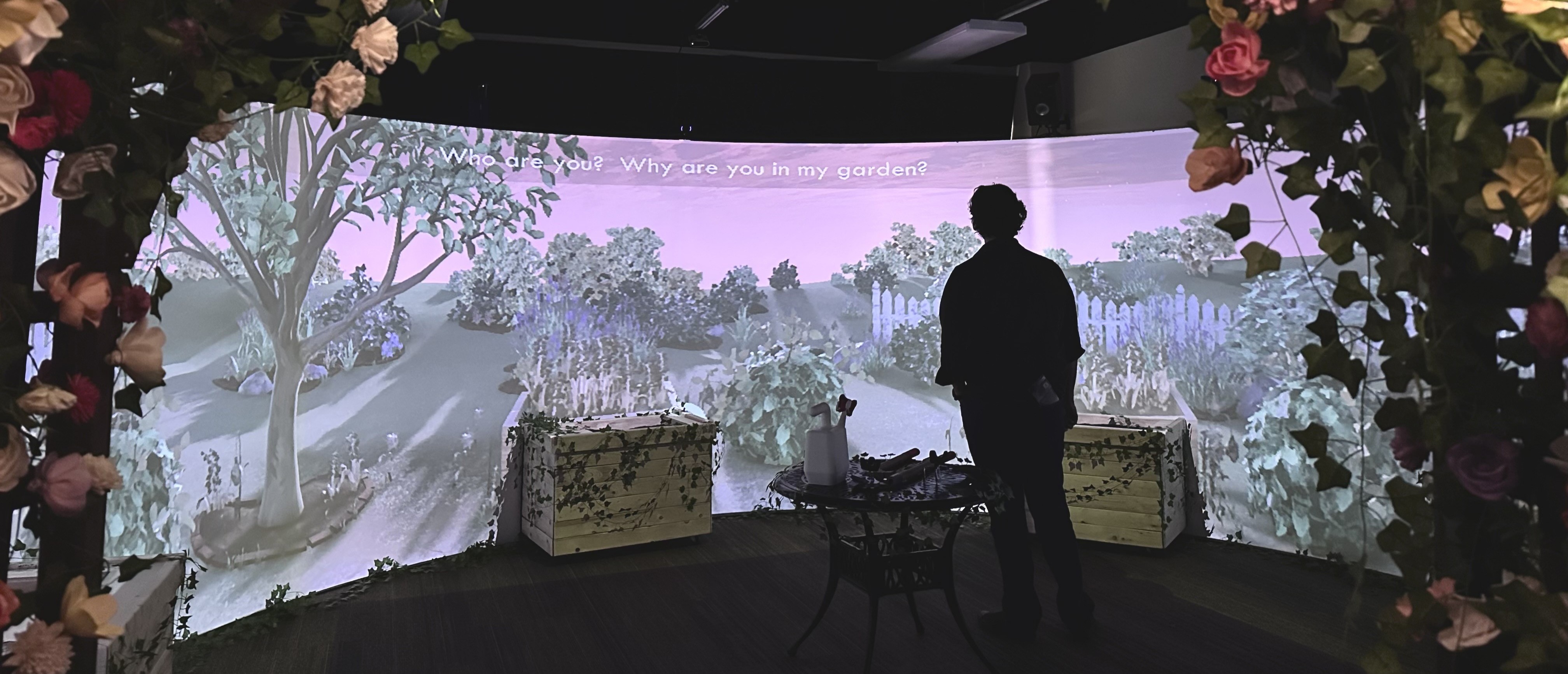
Remnants is an immersive interactive installation inspired by the experiences of dementia caregivers. Designed for a 270-degree projection environment, the experience combines digital projection, embodied interaction, and physical interfaces to encourage audiences to reflect on dementia caregiving through emotional and experiential engagement.
The project aimed to raise awareness of dementia and caregiving, encourage empathy toward caregivers, challenge common misconceptions surrounding dementia, and promote understanding of the importance of early intervention and treatment. In parallel, the project also explored how immersive environments and mixed physical-digital interactions can support transformational experiences.
The experience was developed in the CAVERN, an immersive projection space at Carnegie Mellon University's Entertainment Technology Center, where audiences interacted with a responsive digital garden using physical tools and embodied actions.
Remnants originated from my initial concept proposal. I assembled and led a multidisciplinary team, pitched the project to ETC faculty, and guided development throughout the semester.
As producer, I was responsible for organizing and coordinating the overall production process, including:
- Leading meetings and brainstorming sessions
- Maintaining project direction and team alignment
- Coordinating task tracking and production schedules
- Arranging user testing sessions
- Conducting outreach to subject matter experts for professional feedback
- Designing post-experience surveys and evaluation materials
- Creating informational pamphlets distributed after the experience
- Contributing interaction design, user flow planning, and visual design elements in Figma
A detailed development log and documentation of the iterative design process can be found on the project website.
Research and Design Process
The project employed an iterative, user-centered design process informed by playtesting, observational research, and qualitative feedback. Throughout development, we conducted repeated playtests to evaluate audience understanding, emotional responses, interaction clarity, and overall engagement within the immersive environment.
An important aspect of the project involved refining interactions to better communicate metaphor and intention. Through observation and post-experience discussion, we iteratively adjusted interaction timing, environmental cues, physical affordances, and information design to support audience interpretation and emotional resonance.
The project also incorporated outreach and feedback from subject matter experts and individuals familiar with dementia caregiving, helping ground the experience in real-world perspectives and concerns.
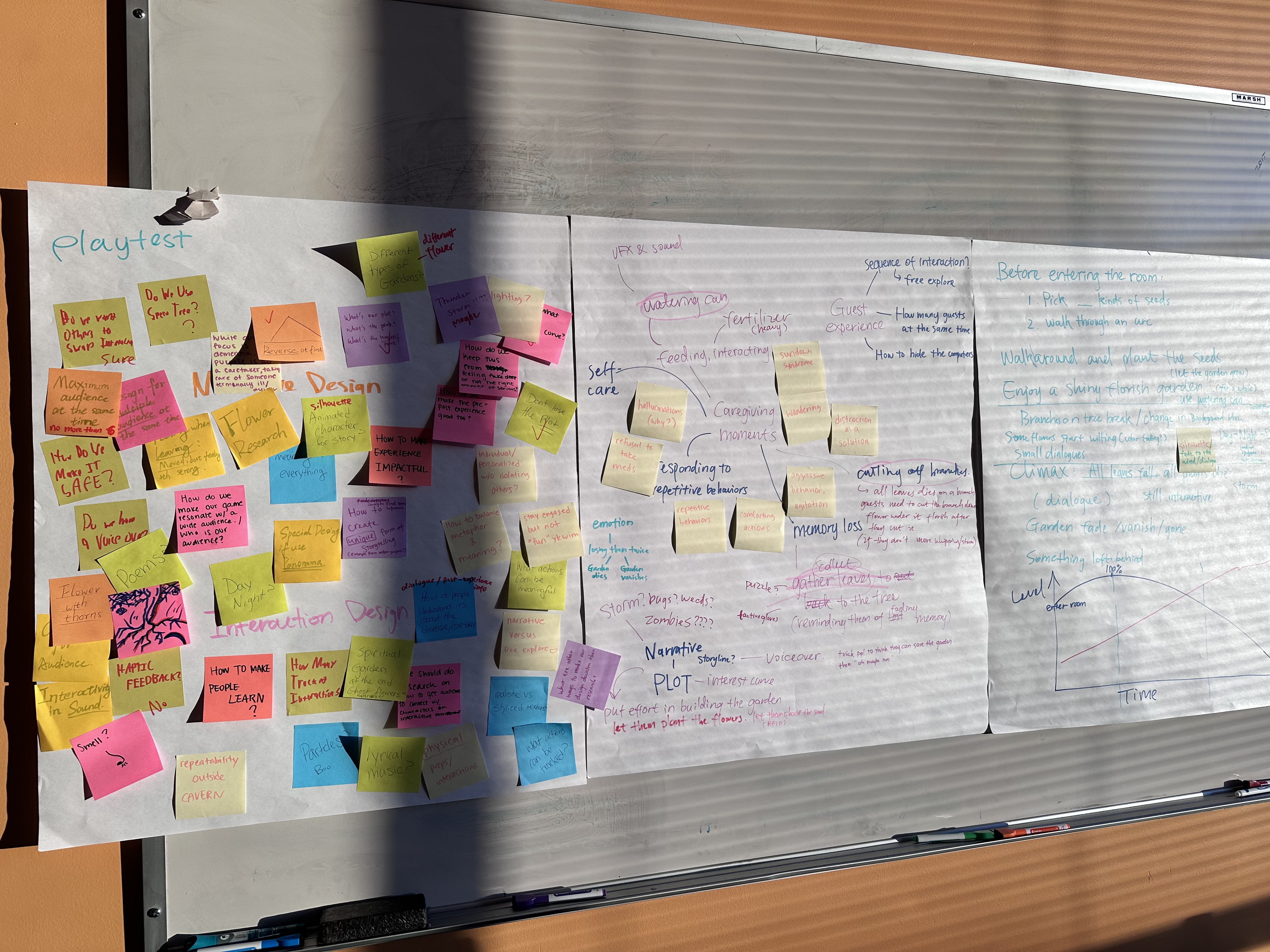
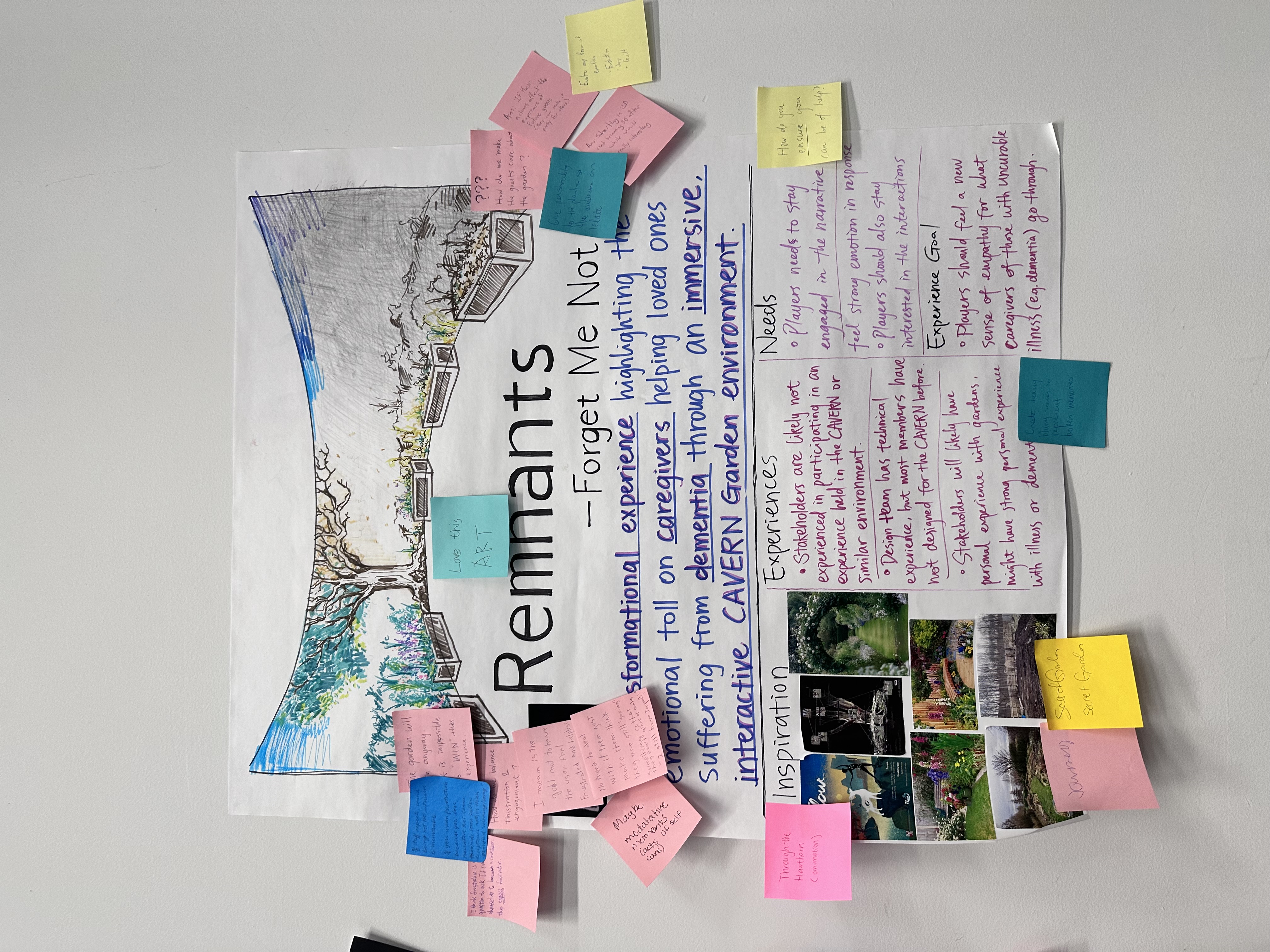
Early brainstorm and critique process: concept mapping, interaction ideas, playtest questions, and workshop feedback helped shape the installation's emotional direction and audience experience.
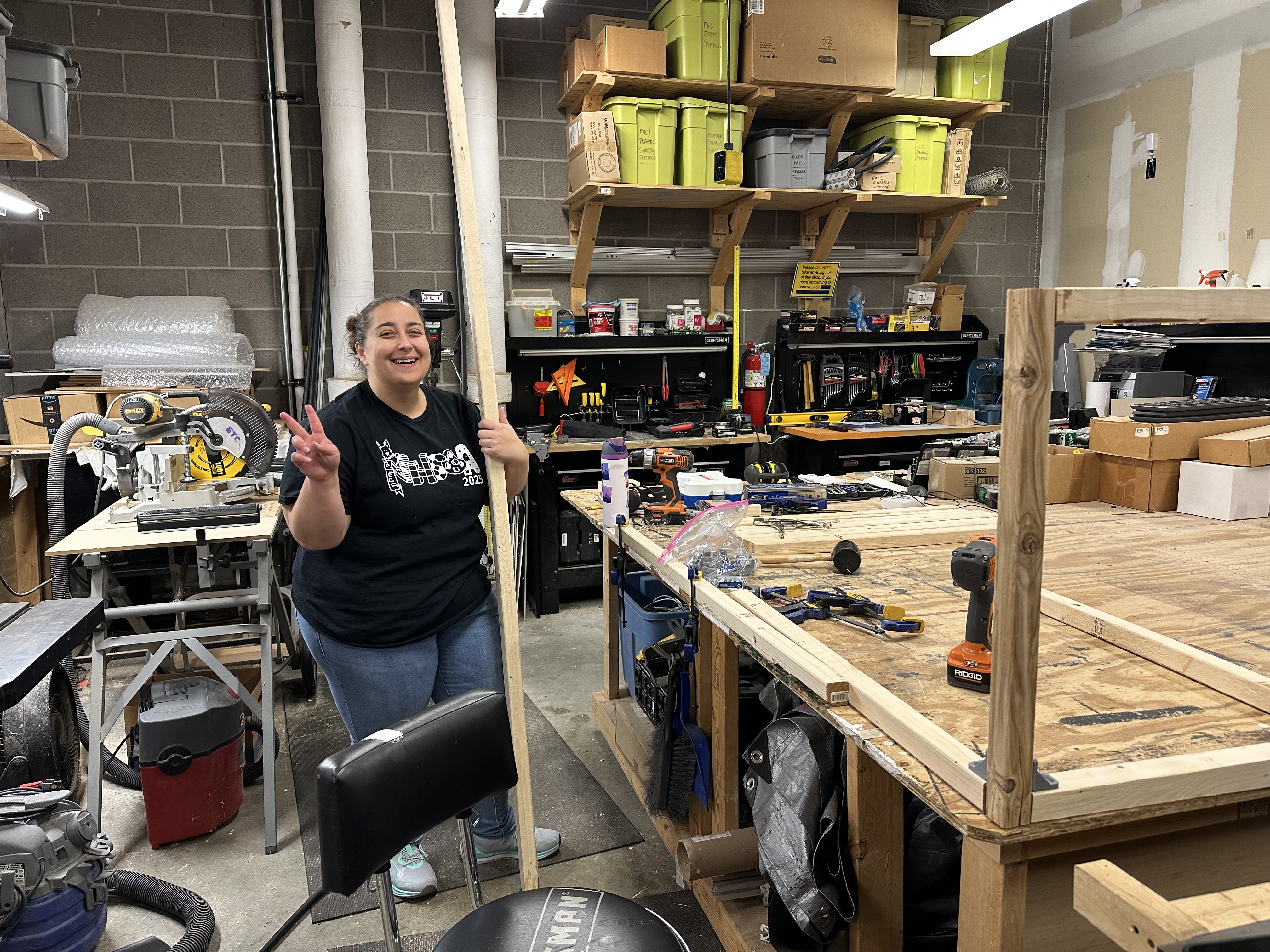
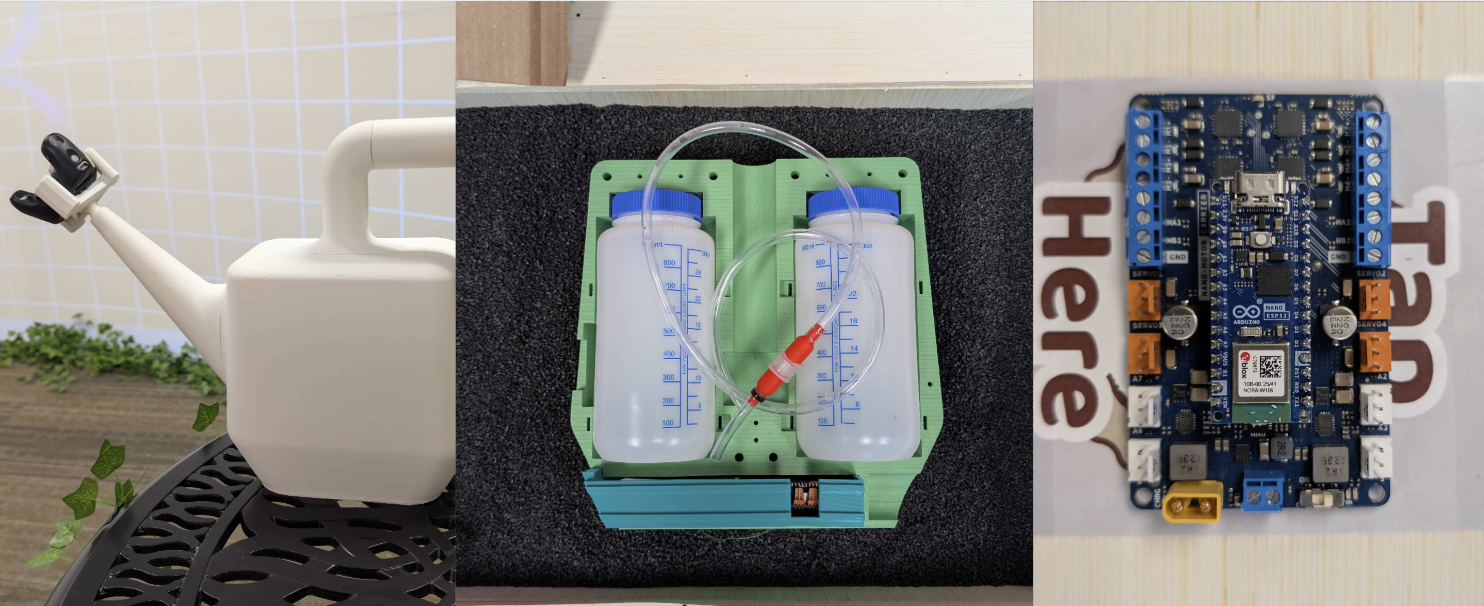
Woodshop, 3D printing, and hardware process: we built the physical installation from scratch, including wooden structures, custom printed components, and embedded interaction hardware.
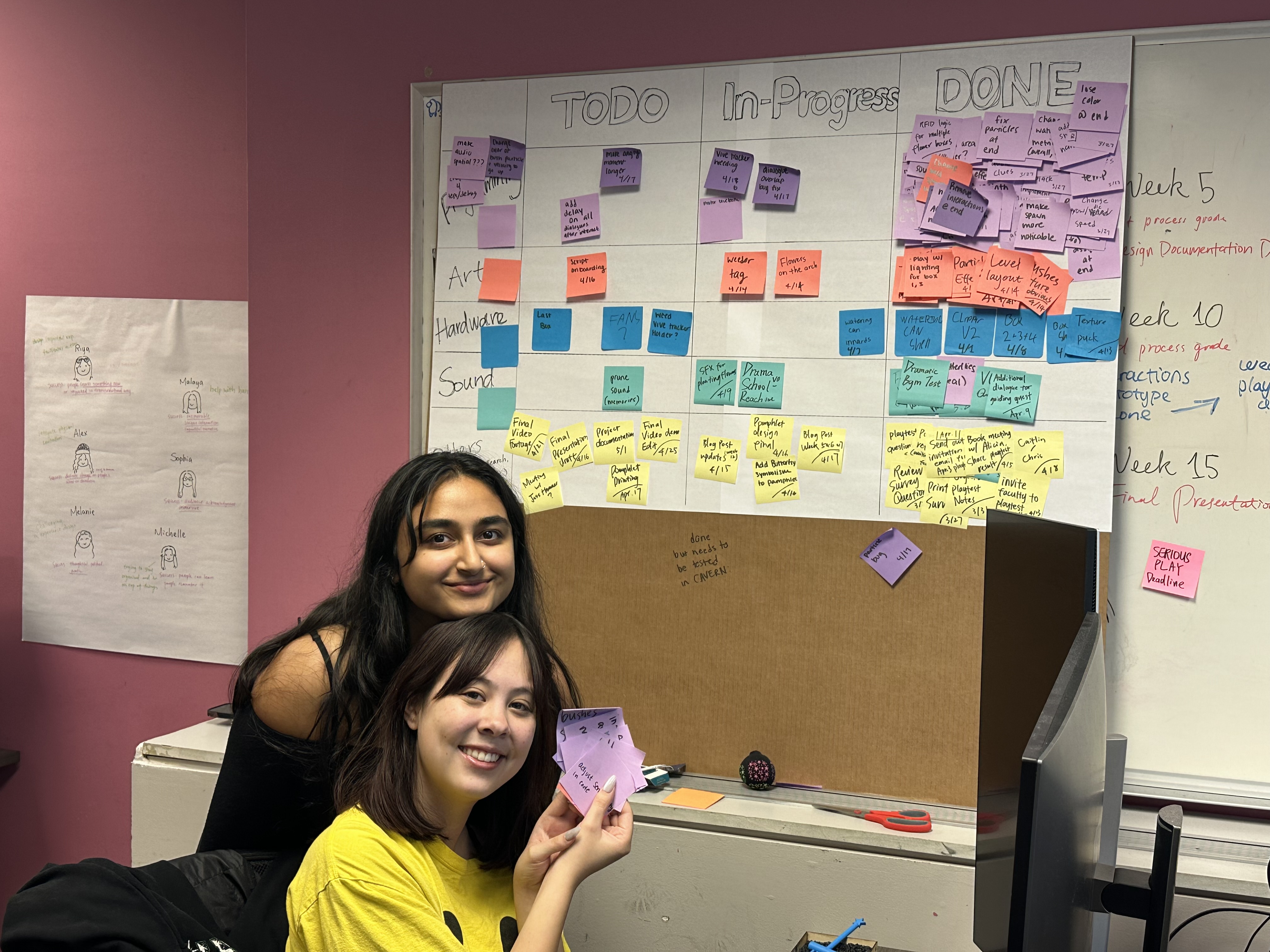
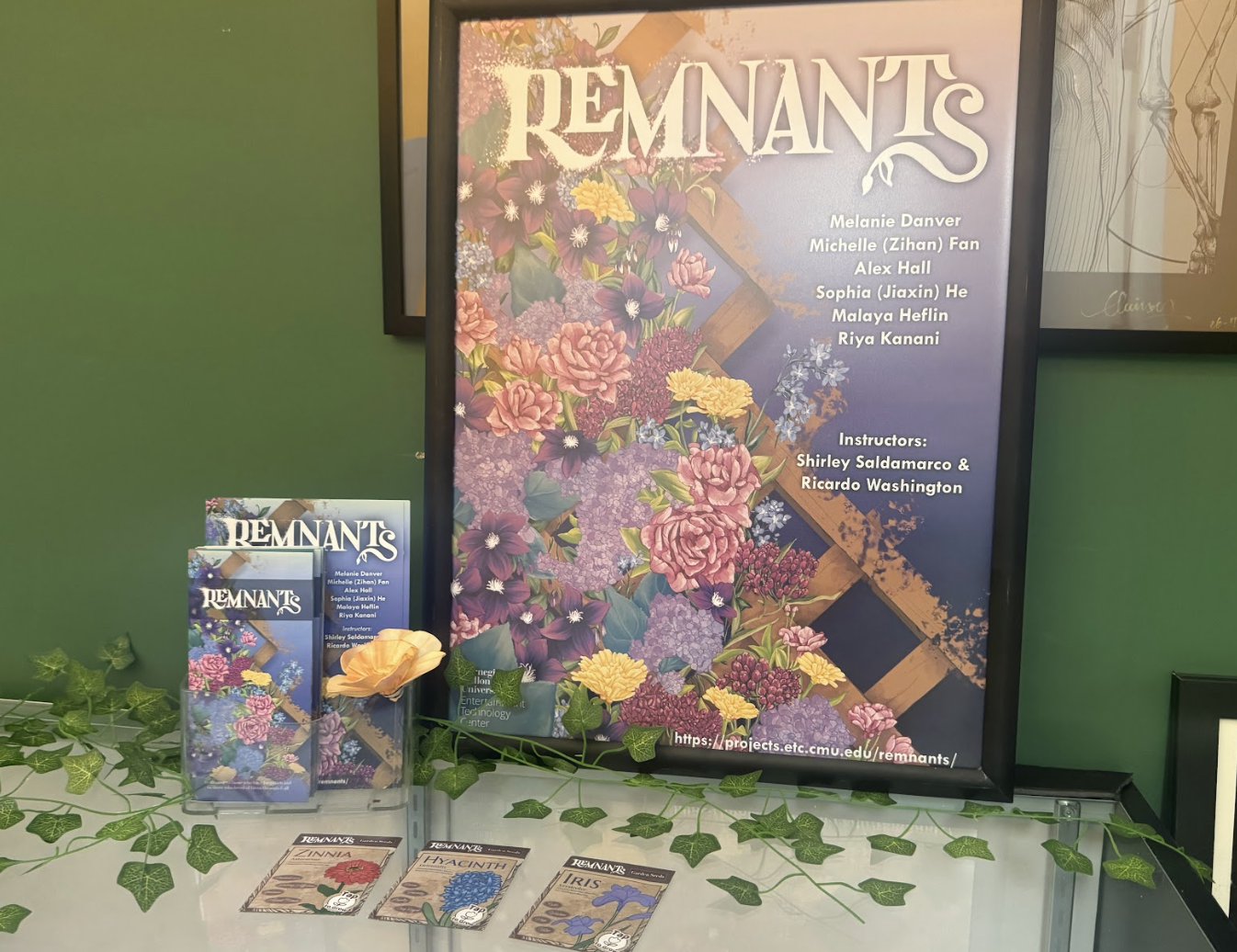
Production tracking and communication materials: we began with Notion for task tracking and production schedules, then switched to a physical task board when it proved more effective for this team. The poster, info sheets, and related materials supported audience communication after the experience.
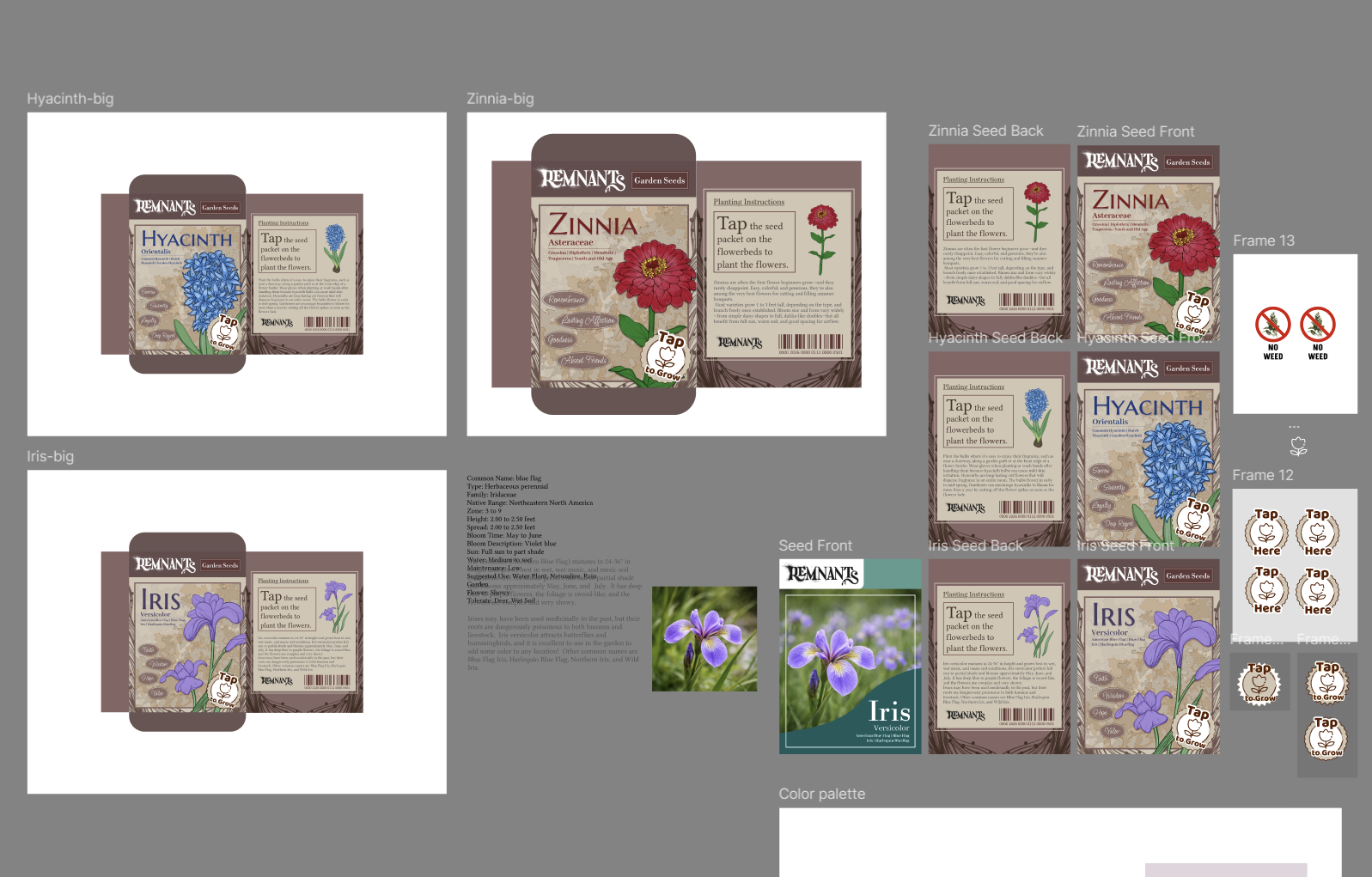
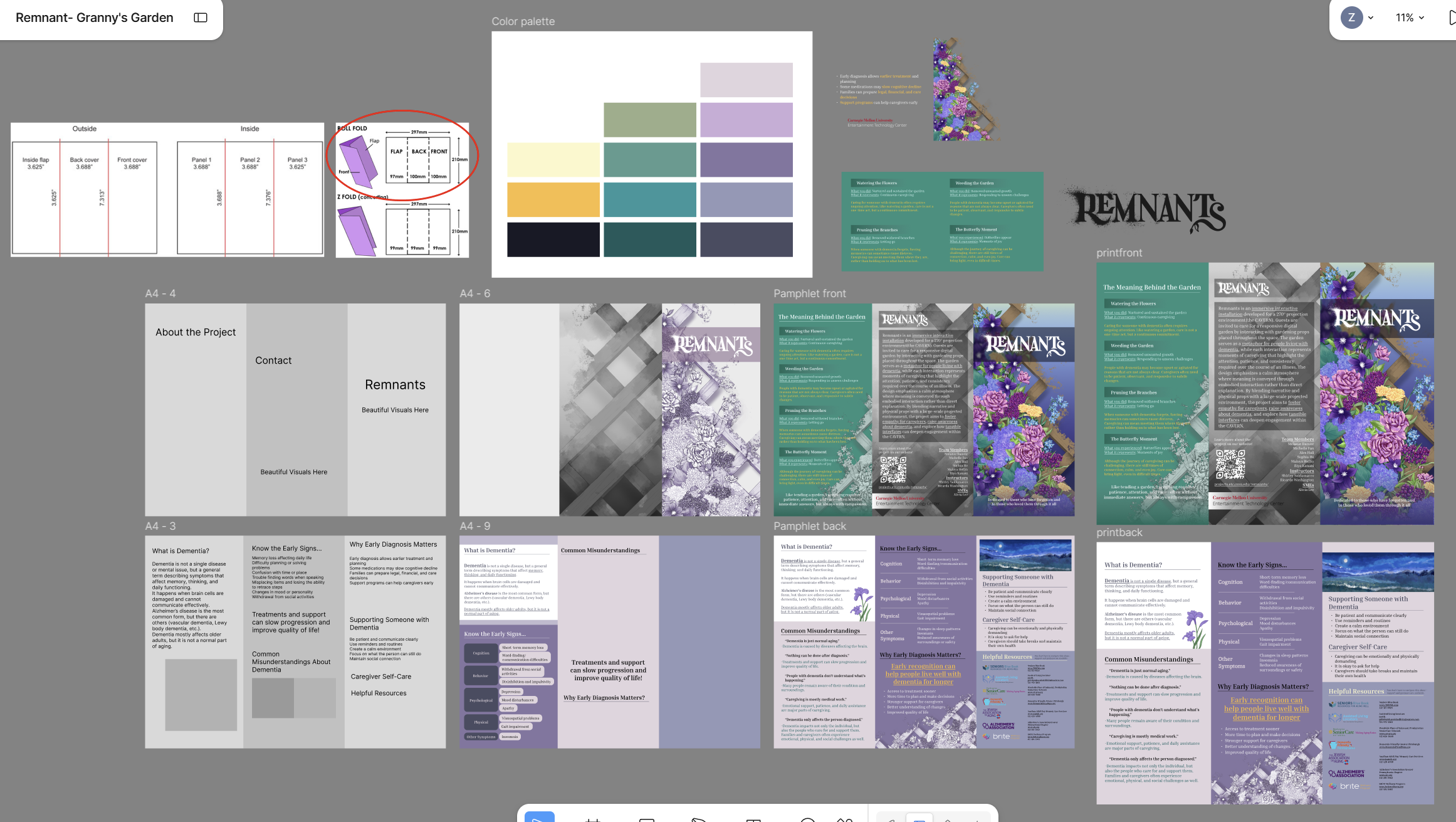
Figma process for seed packet and pamphlet design: these working files show iterations for the seed packets and take-home information handout created to extend audience reflection after the installation.
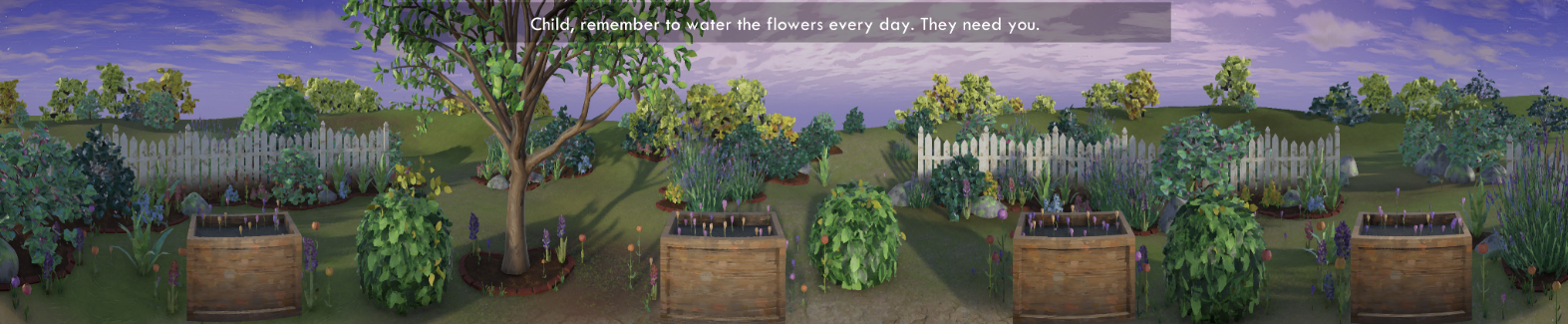
Unity scene for the immersive garden environment, showing the 270-degree digital space and narrative prompt used in the installation.
Remnants significantly shaped my understanding of human-computer interaction, research-through-design, and immersive experience design.
Key lessons from the project include:
- The importance of conducting playtesting early in the design process to maximize opportunities for iteration
- The necessity of adapting production and management strategies to the unique dynamics of each team
- The complexity of designing location-based immersive experiences, where environmental, spatial, and interaction details all contribute to the user experience
- The importance of identifying a clear target audience to support focused and effective transformational design
- The challenges of evaluating empathy and emotional impact, and the value of combining observation, surveys, and pre/post experience evaluation methods to better understand audience responses
Through this experience, I developed a stronger interest in design-oriented HCI research, particularly in immersive interaction, transformational experiences, and research methods centered around qualitative user understanding.
Remnants was featured by Pittsburgh Hot Metal Bridge magazine, highlighting the project's design process, research goals, and its exploration of empathy for dementia caregivers. The feature discusses how the installation combines immersive technology with interaction design to communicate complex caregiving experiences to a broader audience.
Featured Article: How Remnants Nourishes Empathy for Caregivers of People Living with Dementia